Topic

Website fundamentals

What a website actually does for a business, and how it works together with Facebook, LINE and other channels.

Series on this topic

Case series

Composite case

A Bangkok mid-to-high-end restaurant's journey from menu to membership: build in steps, and let every step stand up to market verification

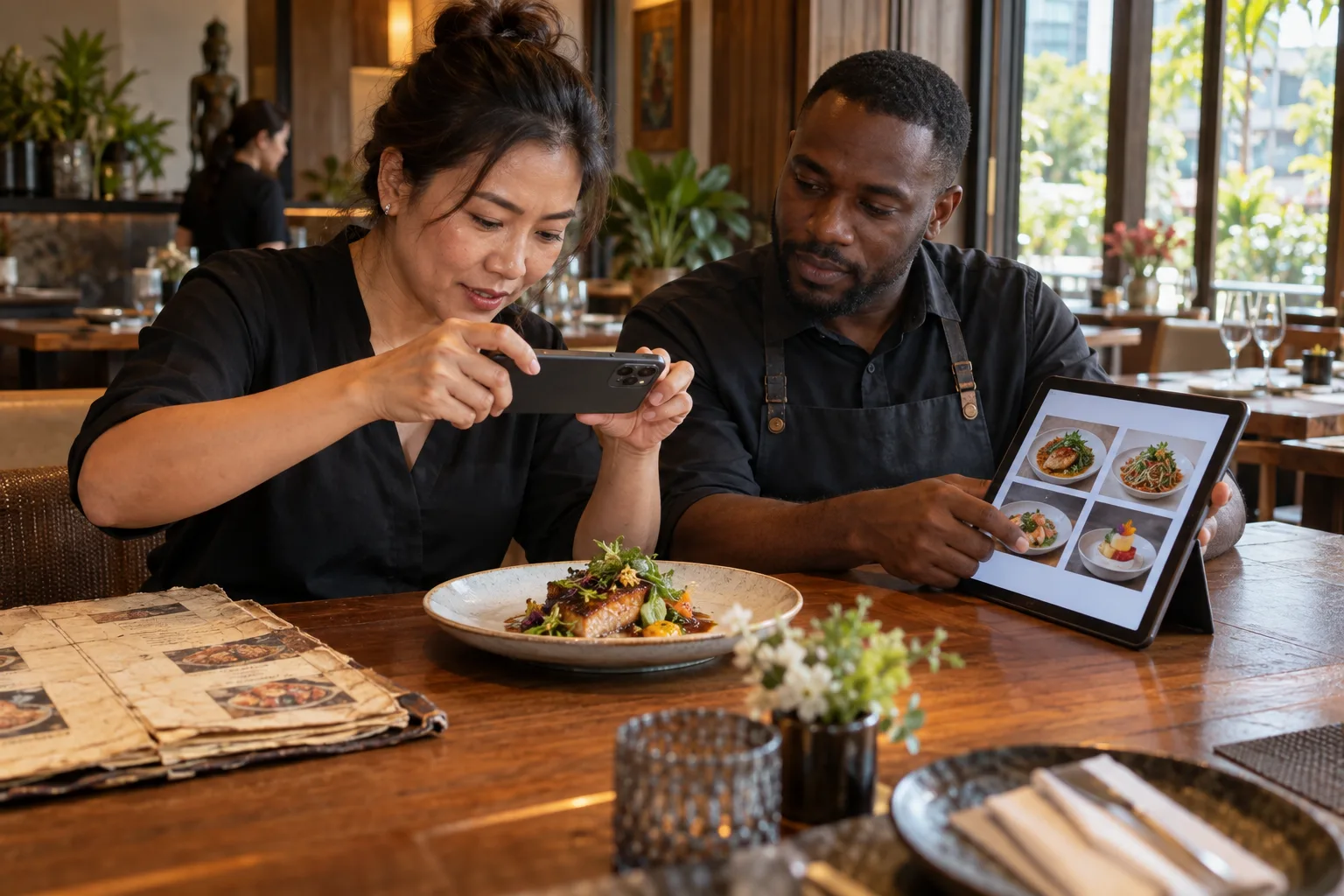
A phase-by-phase case study built from real implementation experience: a Bangkok mid-to-high-end restaurant where orders are written by hand, the kitchen runs on call-outs and clipped paper, customers live in staff memory, and the paper menu ages, gets dirty, and needs reprints or hand-scratch-outs on price changes. It faces a complete need — ordering, kitchen, and customer systems are all missing — yet the systems on the market are either too complex, too expensive once subscriptions add up over years, or sold without any design for digitalization and marketing. With digitalization as the end goal, it builds in steps: menu digitalization first, then marketing to draw guests in, then website ordering to the kitchen (without scheduling for the chef), then a customer base profile, and finally membership and stored-value cards plus long-term social-media operations — every step standing up to market verification and scrutiny.

7 articles · 71 min total

Case series

Composite case

A boutique aesthetic clinic's digital journey: building trust before building systems

A phase-by-phase case study built from real implementation experience: a Bangkok boutique aesthetic clinic needs online booking, consultation conversion and case showcasing — and starts by making itself trustworthy online, so strangers are willing to leave a booking request at all.

6 articles · 53 min total

Case series

Composite case

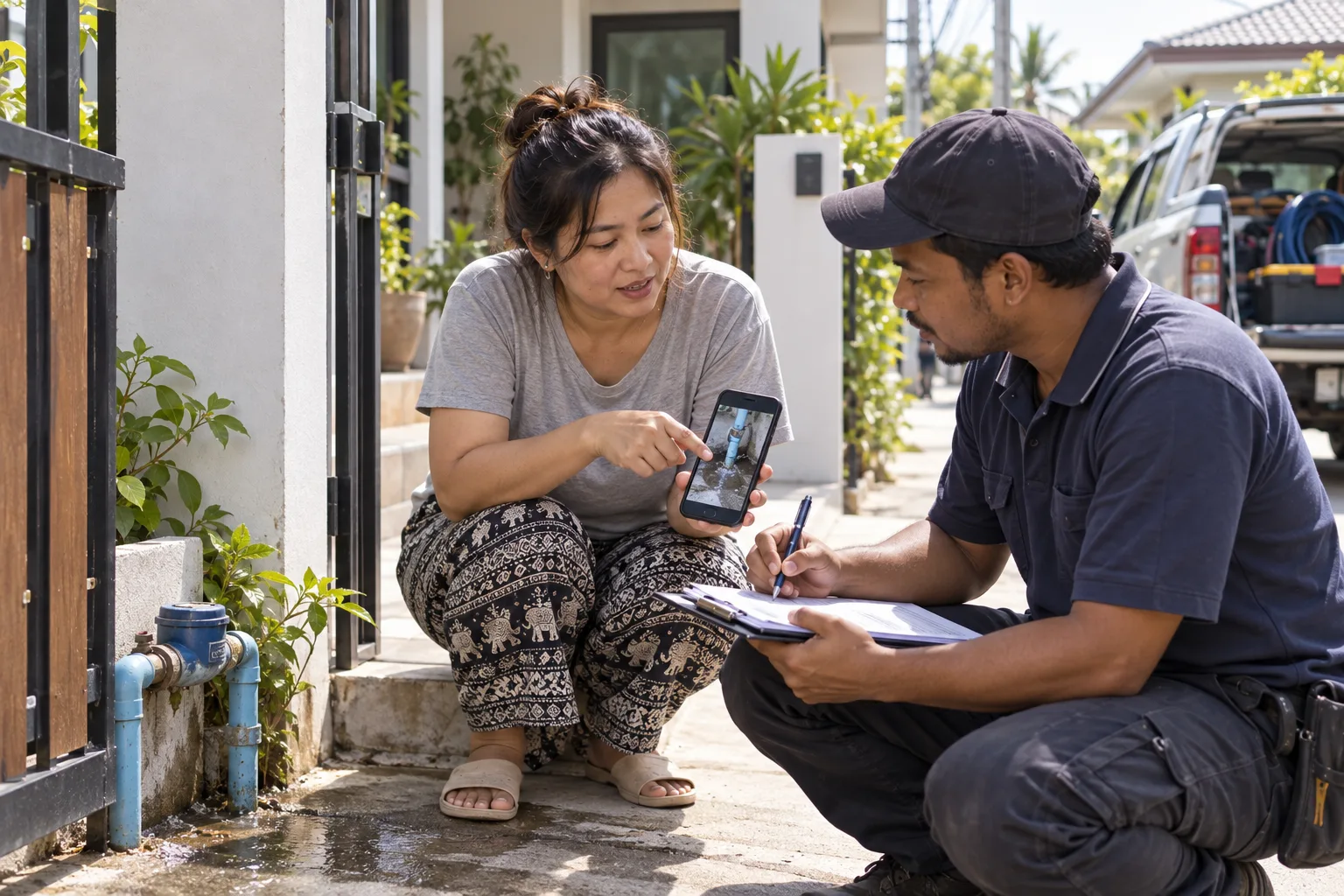
A Chonburi home-repair company's journey to its repeat-customer lifeline: build the quote entry first, then lock in returning customers with a PWA

A phase-by-phase case study built from real implementation experience: a home-repair company serving a concentrated area in Chonburi, with seven technicians split into teams by specialty — plumbing, air conditioning, appliances, and leaks — where technicians work on site, quotes depend on on-site judgment, and business depends on the same neighborhood coming back. It starts with a service-scope and quote-request entry point, converges vague customer problems into trackable quote records, judges from real data how much repeat business it has and how customers return, then uses a low-cost PWA to build a repeat-customer re-discovery entry and a post-service feedback loop — forming a service, feedback, improve, re-discovery cycle, all while avoiding large dispatch systems and a native app.

6 articles · 62 min total

Series

A practical method for small-business digitalization

Seven principles for treating a website as the digital entrance, building wider systems in stages and using real operations to decide what comes next.

7 articles · 53 min total

Case series

Composite case

A print shop's digital journey

A phase-by-phase case study built from real implementation experience: a print shop that needs full digitalization from day one — and why it still builds step by step, starting from a website, letting each phase's evidence and staff experience shape the next.

6 articles · 45 min total

Case series

Composite case

A small Bangkok accounting firm goes digital: from website to PWA to AI, built in stages

A staged case drawn from real implementation experience in accounting services: a small Bangkok accounting firm whose clients submit last month's vouchers by mail, drop-off or LINE, whose intake status lives in Excel and memory, and whose bookkeeping and filings are done by hand. It faces the full need of "missing intake, tracking, tiers and extraction", but off-the-shelf cloud accounting systems either lock in their own accounting logic, cost too much per-seat, or just sell software without designing a client document-collection workflow. With digital as the end goal, it builds in stages: starting with the website and voucher uploads, then an internal intake list, then service tiers defined from real data, then a PWA client portal (tiers, profile, on-demand upgrades), and finally AI woven into daily extraction and sorting with bookkeeper review — every step must hold up to market testing.

7 articles · 72 min total

Case series

Composite case

A spa chain's digital journey: putting receipt QR feedback first

A phase-by-phase case study built from real implementation experience: a multi-branch spa chain needs cross-store consistency, and starts by turning the checkout receipt's QR code into a per-staff feedback capture — then lets that real data and the staff experience shape the next phase.

6 articles · 56 min total

Case series

Composite case

A training center's AI-assisted learning journey: build the entry point first, then talk AI

A phase-by-phase case study built from real implementation experience: a small Thai training center needs to cut repeat enquiries, see its real enrollment numbers, and ease the burden of teachers writing tests and answering questions. It starts with a unified course-info and enrollment entry point, converges enquiries into trackable enrollment data, builds a learner portal that students actually log into, and only then decides — on real usage evidence — whether to plug in AI-assisted test generation and Q&A over an API, so the center can serve more students with limited staff.

6 articles · 60 min total

Case series

Composite case

An upcountry Thai hotel's journey to reduce OTA reliance: build the entry point first, then self-booking

A phase-by-phase case study built from real implementation experience: a small upcountry Thai hotel, whose guests are mostly tourists passing through the province, starts out relying on Agoda bookings and phone/LINE contact, with high commission to carry. It builds a direct channel of its own — website room showcases, a Google Maps listing, and guided phone/LINE bookings — then judges from real enquiry and booking data whether a second phase is worth it, and finally brings repeat guests back at checkout and builds minimal self-booking. All along it avoids large hotel systems and only builds the smallest loop that reduces OTA reliance.

6 articles · 61 min total

Series

Why your business needs its own website

How a website works with Facebook and LINE as an owned information source, a functional entry point and a measurable conversion path — without pretending it is the whole business system.

7 articles · 47 min total

Articles

Case studyComposite case10 min read

A small Bangkok accounting firm goes digital, Part 1: it lacks intake, tracking, tiers and extraction — why still not buy it all at once

This small Bangkok accounting firm genuinely lacks everything: clients submit vouchers by mail, drop-off or LINE; intake status lives in Excel and memory; bookkeeping is done by hand. But off-the-shelf cloud accounting systems either lock in their own chart-of-accounts logic, cost too much per-seat, or just sell software without designing a client document-collection workflow. Digital is the end goal — but build it in stages.

Read article
Case studyComposite case10 min read

A small Bangkok accounting firm goes digital, Part 2: start with the website — clients upload vouchers every month

The first step is not buying accounting software — it is building the website and a voucher upload entry: services spelled out clearly, and clients submitting last month's vouchers online as images, instead of mail, drop-off and scattered LINE messages. Clients submit images; the original vouchers stay with the client as the law requires. Then watch: do clients really switch to online submission, and is the image quality good enough?

Read article
Case studyComposite case10 min read

A home-repair company goes digital, part 1: why build a service-scope and quote entry first, not a dispatch system or an app

A home-repair company living off neighborhood repeat business, with technicians in the field and quotes depending on on-site judgment, hurts less from lacking a dispatch system than from vague customer problems it can't even see in its own books. Phase one builds an entry and a record so vague problems become traceable leads.

Read article
Case studyComposite case10 min read

A home-repair company goes digital, part 2: phase one lands — a quote-request form, phone/LINE guidance, and one unified quote record

Have customers describe the problem first, then quote manually, and cut wasted trips; meanwhile converge every quote request into one record, so the owner sees for the first time which jobs are worth the trip, which lose money, and how high the wasted-visit rate is.

Read article
Case studyComposite case10 min read

An upcountry hotel goes digital, part 1: why build a room showcase first, not online booking

An upcountry hotel taking bookings through Agoda and phone/LINE hurts less from lacking online booking than from guests finding it, calling, and still seeing no unified, trustworthy room info. Phase one builds display and guidance so a direct channel has somewhere to land.

Read article
Case studyComposite case10 min read

An upcountry hotel goes digital, part 2: phase one lands — Google Maps, a room showcase, and guided phone/LINE booking

Provincial travellers decide where to stay starting from a map. This chapter puts the hotel on Google Maps, lands clicks on the room pages, and takes orders over phone/LINE — and explains why human confirmation beats an online-booking engine at this stage.

Read article
Case studyComposite case10 min read

A Bangkok mid-to-high-end restaurant goes digital, part 1: it lacks ordering, kitchen, and customer systems — so why can't it just buy them all at once

This Bangkok mid-to-high-end restaurant genuinely lacks everything: orders by hand, kitchen by shouted call-outs, customers by memory. But the systems on the market are either too complex, too expensive once subscriptions add up over years, or sold without any design for digitalization and marketing. Digitalization is the end goal — but it has to be built in steps.

Read article
Case studyComposite case10 min read

A Bangkok mid-to-high-end restaurant goes digital, part 2: start with menu digitalization — it is the foundation of everything after it

The first step is not buying a system; it's getting the menu right. Every dish's name, description, price, and photo goes online into one unified digital menu. It solves the paper-menu problems of aging, dirtying, and reprinting or hand-scratching price changes — and it is the foundation the website ordering and kitchen orders are later built on.

Read article
Case studyComposite case10 min read

A Bangkok mid-to-high-end restaurant goes digital, part 3: start with marketing — make guests able to find it, understand it, and want to come

The menu is online, but no guests are coming yet. This chapter does marketing first: fixing Google Maps and other platform info, introducing new food and interior photos, and building a website so potential customers can find the restaurant, understand it, and decide it's worth the visit. Draw the flow in first; ordering comes after.

Read article
Case studyComposite case10 min read

A training center goes digital, part 1: from scattered course info to a first trustworthy website

A training center's course enquiries are endlessly repetitive, but the first build is not a system or AI — it is unified course, schedule, price and enrollment information, so a stranger can understand the school and want to enroll, and so later data capture has a foundation.

Read article
Case studyComposite case10 min read

A training center goes digital, part 3: converging scattered chat enquiries into trackable enrollment data

The center turns repetitive enquiries into course pages plus an enrollment form, so every enquiry becomes a structured enrollment record. Admin is freed from repeat answers, and the school sees its enquiry volume and enrollment conversion for the first time.

Read article
Case studyComposite case8 min read

A boutique aesthetic clinic goes digital, part 1: from word of mouth to a trustworthy first website

A high-ticket, high-trust clinic makes its first website about one job: making strangers willing to leave a consultation request. Physician credentials, environment, equipment and compliant case showcases come before any booking engine.

Read article
Case studyComposite case8 min read

A boutique aesthetic clinic goes digital, part 2: why trust and consultation capture come before the booking engine

The clinic clearly needs online booking. But a booking engine only converts people who have already decided to trust the clinic — and this clinic's bottleneck was that strangers were deciding not to. The first data slice worth building is the consultation request itself.

Read article
Case studyComposite case9 min read

A boutique aesthetic clinic goes digital, part 3: converging scattered consultations into trackable requests

The clinic's consultations were being swallowed by midnight LINE chats. The next build captures every consultation request — from the form, LINE and phone — into one place, so the clinic can finally see volume, channel and what happens after.

Read article
Case studyComposite case8 min read

A print shop goes digital, part 1: from scattered info to a first website

A print shop needs end-to-end digital operations, but begins with the public information, file-enquiry and ownership foundation that every later phase will depend on.

Read article
Case studyComposite case9 min read

A spa chain goes digital, part 1: from scattered store info to a first chain website

A multi-branch spa owner needs cross-store consistency, but the first phase builds the unified public information and ownership foundation every later phase depends on.

Read article
Case studyComposite case10 min read

A spa chain goes digital, part 3: the receipt QR that captures per-staff feedback

The chain turns each checkout receipt into a feedback entry point — binding the review to the therapist at receipt time, archiving responses to one place, and routing low scores to the owner and managers.

Read article
Explainer9 min read

Where website building and maintenance costs come from

The cost of a website or business system is shaped less by the word 'website' and more by content readiness, workflow ownership, exceptions, integrations and ongoing responsibility.

Read article
Explainer6 min read

I already have Facebook — why would I need a website?

Facebook creates reach and conversation; your website is the owned place where customers understand the business, take structured action and where you can measure that path.

Read article
Explainer6 min read

Your website as the source of truth for your business

When your service explanations, opening info and policies live in one stable place, every chat and social post gets shorter — you link instead of re-answering.

Read article
Explainer7 min read

A website is the entry point to digitalization, not the whole system

A business website can become the public entrance for information, useful actions and measurable marketing without pretending to be the entire operation behind it.

Read article
Explainer7 min read

What is a conversion path?

The realistic steps between a stranger seeing your post and becoming a paying customer — and where a website actually fits in that chain.

Read article