
A Bangkok mid-to-high-end restaurant goes digital, part 3: start with marketing — make guests able to find it, understand it, and want to come
The menu is online, but no guests are coming yet. This chapter does marketing first: fixing Google Maps and other platform info, introducing new food and interior photos, and building a website so potential customers can find the restaurant, understand it, and decide it's worth the visit. Draw the flow in first; ordering comes after.
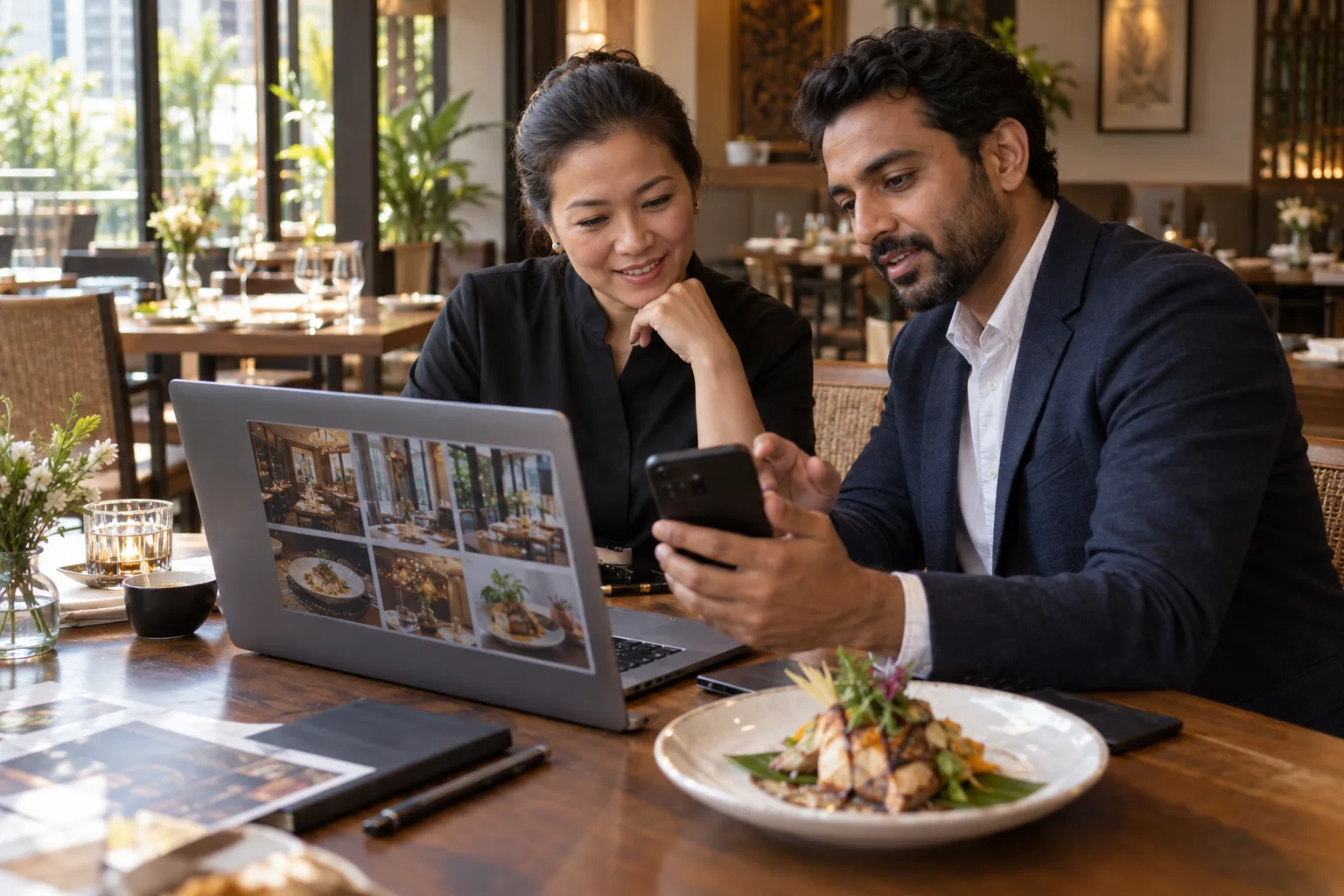
Last chapter put the menu online. This one asks a more fundamental question: who is the menu for? If guests don’t know the restaurant exists, can’t find it, and can’t judge whether it’s worth the visit once they do, then a great menu is just data sitting online for nobody. So the second step is marketing.
Why marketing comes before ordering
This restaurant’s customer acquisition runs mostly on word of mouth, Google Maps searches, and Instagram/Facebook. What a guest does before arriving is: search the place, look at the menu, look at the photos, read the reviews, and judge whether it’s worth a special trip. The owner found he was losing points on exactly this stage:
- The Google Maps info was out of date, menu photos old or missing, opening hours wrong;
- A potential customer could find the place but saw nothing that would persuade them to make the trip;
- There was no website — outside Instagram, there was no fuller, more trustworthy window into the restaurant.
The logic of marketing first is simple: a restaurant nobody walks into has no use for an ordering system. Ordering is a catch — it catches people who have already decided to come. And the decision “do I want to come” happens in the moment of search, browse, and judgment. That is marketing’s battlefield.
Step one: fix Google Maps and other platform info
For a mid-to-high-end restaurant, Google Maps is the first doorway where guests make decisions. This step does three things:
- Verify the info: name, address, opening hours, phone, menu link — confirm it all; there can be no “the map says open but it’s actually closed”;
- Update the menu: attach the online menu from last chapter to the map, so people who search can already see this menu in the listing and reviews;
- Link to the website: the map and social platforms point to the website, so there is one trustworthy source of information.
Step two: bring in new photos
Trust in mid-to-high-end dining largely rides on visuals. This step:
- Re-shoot the dishes and the room: signature dishes, drinks, and the interior — photos that truly represent the restaurant’s quality replace the old ones;
- Put the photos everywhere: Google Maps, Instagram, Facebook, and the website share the same high-quality set, staying consistent;
- Make photos match the menu: what guests see and what they can order lining up is the key to lowering “disappointed on arrival”.
Step three: build the website
For a mid-to-high-end restaurant, the website is where “complete information” lives:
- Menu page: the online menu from last chapter lives here as the trustworthy source;
- Atmosphere and location page: photos, how to get there, parking, opening hours — guests arrive with the right expectations;
- Booking and contact: phone, LINE, or a simple booking form, all pointing to one action — book a table or come in;
- About page: what this place is, who the chef is, how ingredients are chosen — making the positioning clear.
The website doesn’t replace Instagram — Instagram handles day-to-day reach and interaction; the website preserves long-lived, trustworthy, citable information.
What this phase was deliberately not
- No website ordering. This phase only makes people want to come; ordering stays phone, LINE, or in person.
- No kitchen system. Order flow doesn’t change.
- No paid ad spend. Get the free entry points right first; paid advertising is a conversation for after verification, when there’s a clear return.
Nothing in-shop changes this phase. Marketing is work between the owner and the market; servers and kitchen are barely affected — which is why it fits as the second step: low cost, observable effect, doesn’t disturb operations.
What entering the next step requires
Once marketing is live, the owner watches:
- whether Google Maps searches, website visits, and Instagram interaction show an observable rise;
- whether first-time customers increase, and whether they are “searched-in” customers or the old regulars;
- whether guests can build the right expectation of the place before arriving.
Once guests are willing to come, the next thing is the catch. Part 4 is about starting from the basics: website ordering to the kitchen.
Boundary matters: the Google Maps listing, website building, and photo and info updates belong to a normal website project. The website-ordering-to-kitchen, customer-profile, membership-stored-value, and social-media-operations systems in this series are separate projects with their own scope — they are not part of a standard website package.