Topic

Forms & bookings

How enquiry forms, file submissions and bookings work — and where a form ends and a system begins.

Series on this topic
A restaurant owner and staff review a sample menu and digital service ideas together.

Case series

Composite case

A Bangkok mid-to-high-end restaurant's journey from menu to membership: build in steps, and let every step stand up to market verification

A phase-by-phase case study built from real implementation experience: a Bangkok mid-to-high-end restaurant where orders are written by hand, the kitchen runs on call-outs and clipped paper, customers live in staff memory, and the paper menu ages, gets dirty, and needs reprints or hand-scratch-outs on price changes. It faces a complete need — ordering, kitchen, and customer systems are all missing — yet the systems on the market are either too complex, too expensive once subscriptions add up over years, or sold without any design for digitalization and marketing. With digitalization as the end goal, it builds in steps: menu digitalization first, then marketing to draw guests in, then website ordering to the kitchen (without scheduling for the chef), then a customer base profile, and finally membership and stored-value cards plus long-term social-media operations — every step standing up to market verification and scrutiny.

7 articles · 71 min total

A clinic owner and staff welcome a visitor in a bright, private consultation reception.

Case series

Composite case

A boutique aesthetic clinic's digital journey: building trust before building systems

A phase-by-phase case study built from real implementation experience: a Bangkok boutique aesthetic clinic needs online booking, consultation conversion and case showcasing — and starts by making itself trustworthy online, so strangers are willing to leave a booking request at all.

6 articles · 53 min total

A local repair-company team reviews a customer request in its workshop office.

Case series

Composite case

A Chonburi home-repair company's journey to its repeat-customer lifeline: build the quote entry first, then lock in returning customers with a PWA

A phase-by-phase case study built from real implementation experience: a home-repair company serving a concentrated area in Chonburi, with seven technicians split into teams by specialty — plumbing, air conditioning, appliances, and leaks — where technicians work on site, quotes depend on on-site judgment, and business depends on the same neighborhood coming back. It starts with a service-scope and quote-request entry point, converges vague customer problems into trackable quote records, judges from real data how much repeat business it has and how customers return, then uses a low-cost PWA to build a repeat-customer re-discovery entry and a post-service feedback loop — forming a service, feedback, improve, re-discovery cycle, all while avoiding large dispatch systems and a native app.

6 articles · 62 min total

A small-business team reviews a website and practical workflow improvements.

Series

A practical method for small-business digitalization

Seven principles for treating a website as the digital entrance, building wider systems in stages and using real operations to decide what comes next.

7 articles · 53 min total

A print-shop owner and staff review a sample job at a compact neighborhood workshop.

Case series

Composite case

A print shop's digital journey

A phase-by-phase case study built from real implementation experience: a print shop that needs full digitalization from day one — and why it still builds step by step, starting from a website, letting each phase's evidence and staff experience shape the next.

6 articles · 45 min total

A small Bangkok accounting team reviews client vouchers together in its office.

Case series

Composite case

A small Bangkok accounting firm goes digital: from website to PWA to AI, built in stages

A staged case drawn from real implementation experience in accounting services: a small Bangkok accounting firm whose clients submit last month's vouchers by mail, drop-off or LINE, whose intake status lives in Excel and memory, and whose bookkeeping and filings are done by hand. It faces the full need of "missing intake, tracking, tiers and extraction", but off-the-shelf cloud accounting systems either lock in their own accounting logic, cost too much per-seat, or just sell software without designing a client document-collection workflow. With digital as the end goal, it builds in stages: starting with the website and voucher uploads, then an internal intake list, then service tiers defined from real data, then a PWA client portal (tiers, profile, on-demand upgrades), and finally AI woven into daily extraction and sorting with bookkeeper review — every step must hold up to market testing.

7 articles · 72 min total

A spa-chain owner and operations lead review customer feedback across branches.

Case series

Composite case

A spa chain's digital journey: putting receipt QR feedback first

A phase-by-phase case study built from real implementation experience: a multi-branch spa chain needs cross-store consistency, and starts by turning the checkout receipt's QR code into a per-staff feedback capture — then lets that real data and the staff experience shape the next phase.

6 articles · 56 min total

A training-center owner and staff review course schedules and enrollment information together.

Case series

Composite case

A training center's AI-assisted learning journey: build the entry point first, then talk AI

A phase-by-phase case study built from real implementation experience: a small Thai training center needs to cut repeat enquiries, see its real enrollment numbers, and ease the burden of teachers writing tests and answering questions. It starts with a unified course-info and enrollment entry point, converges enquiries into trackable enrollment data, builds a learner portal that students actually log into, and only then decides — on real usage evidence — whether to plug in AI-assisted test generation and Q&A over an API, so the center can serve more students with limited staff.

6 articles · 60 min total

Hotel staff help a traveler review room choices and direct booking information at reception.

Case series

Composite case

An upcountry Thai hotel's journey to reduce OTA reliance: build the entry point first, then self-booking

A phase-by-phase case study built from real implementation experience: a small upcountry Thai hotel, whose guests are mostly tourists passing through the province, starts out relying on Agoda bookings and phone/LINE contact, with high commission to carry. It builds a direct channel of its own — website room showcases, a Google Maps listing, and guided phone/LINE bookings — then judges from real enquiry and booking data whether a second phase is worth it, and finally brings repeat guests back at checkout and builds minimal self-booking. All along it avoids large hotel systems and only builds the smallest loop that reduces OTA reliance.

6 articles · 61 min total

A small-business owner and digital advisor compare a social channel with the business website.

Series

Why your business needs its own website

How a website works with Facebook and LINE as an owned information source, a functional entry point and a measurable conversion path — without pretending it is the whole business system.

7 articles · 47 min total

Articles

A business client uploads voucher images through the firm's website while an accountant provides guidance.
Case studyComposite case10 min read

A small Bangkok accounting firm goes digital, Part 2: start with the website — clients upload vouchers every month

The first step is not buying accounting software — it is building the website and a voucher upload entry: services spelled out clearly, and clients submitting last month's vouchers online as images, instead of mail, drop-off and scattered LINE messages. Clients submit images; the original vouchers stay with the client as the law requires. Then watch: do clients really switch to online submission, and is the image quality good enough?

Read article
Two bookkeepers review a client intake list beside organized voucher folders.
Case studyComposite case10 min read

A small Bangkok accounting firm goes digital, Part 3: the internal side — turn received vouchers into a trackable list

Once clients submit vouchers reliably, the next step is not a bigger system — it is turning internal intake into one list: client, month, item count and missing-document status at a glance, replacing Excel and memory. Who has not delivered for which month no longer needs a phone call to find out. This list is the firm's own workflow, not a full CRM — but it is the data foundation for the tiers and AI that come later.

Read article
A client checks service level and monthly document status in a phone portal.
Case studyComposite case11 min read

A small Bangkok accounting firm goes digital, Part 5: the PWA client portal — tiers, profile and on-demand upgrades

With the tiers defined, put them into a PWA portal clients can open any time: clients see their own service tier, their client profile and their monthly submission status, and when documents suddenly pile up they can upgrade their service level for that month. An upgrade needs the firm's confirmation and reconciliation — it does not take effect just by pressing a button. Pricing moves from private quotes to something clients can see.

Read article
A repair-company owner takes a customer call while a technician reviews job photos and a paper quote form.
Case studyComposite case10 min read

A home-repair company goes digital, part 2: phase one lands — a quote-request form, phone/LINE guidance, and one unified quote record

Have customers describe the problem first, then quote manually, and cut wasted trips; meanwhile converge every quote request into one record, so the owner sees for the first time which jobs are worth the trip, which lose money, and how high the wasted-visit rate is.

Read article
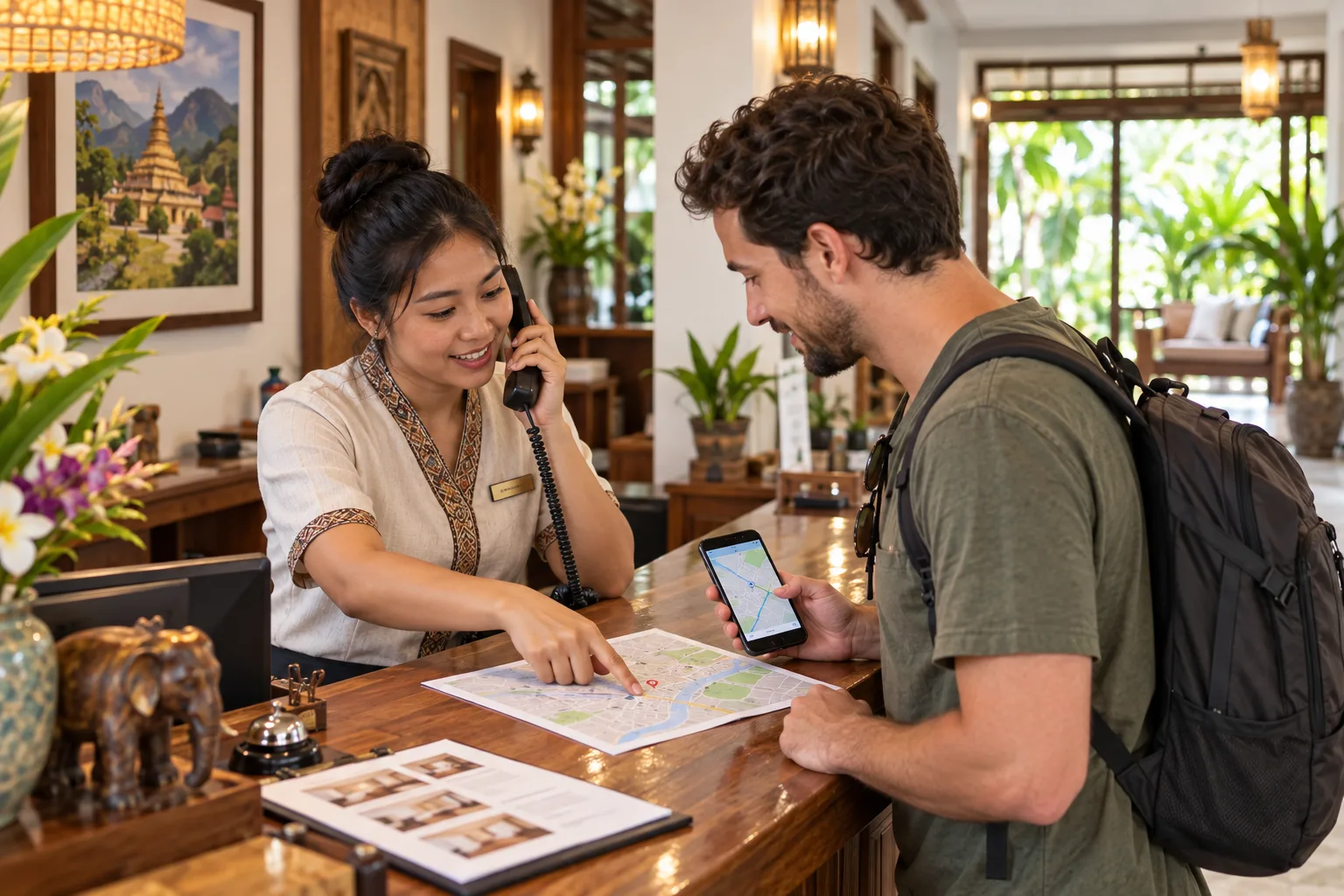
A receptionist answers a booking call and points a traveler to the hotel on a map.
Case studyComposite case10 min read

An upcountry hotel goes digital, part 2: phase one lands — Google Maps, a room showcase, and guided phone/LINE booking

Provincial travellers decide where to stay starting from a map. This chapter puts the hotel on Google Maps, lands clicks on the room pages, and takes orders over phone/LINE — and explains why human confirmation beats an online-booking engine at this stage.

Read article
A front-desk clerk records a direct booking inquiry on a laptop while a guest waits.
Case studyComposite case10 min read

An upcountry hotel goes digital, part 3: let the front desk catch phone/LINE bookings and leave a trace

The map and website pull traffic in, but the front desk still records on paper and memory. This chapter turns direct enquiries into one record — source, room type, dates, outcome — without extra burden, so the hotel sees its direct channel's real data for the first time.

Read article
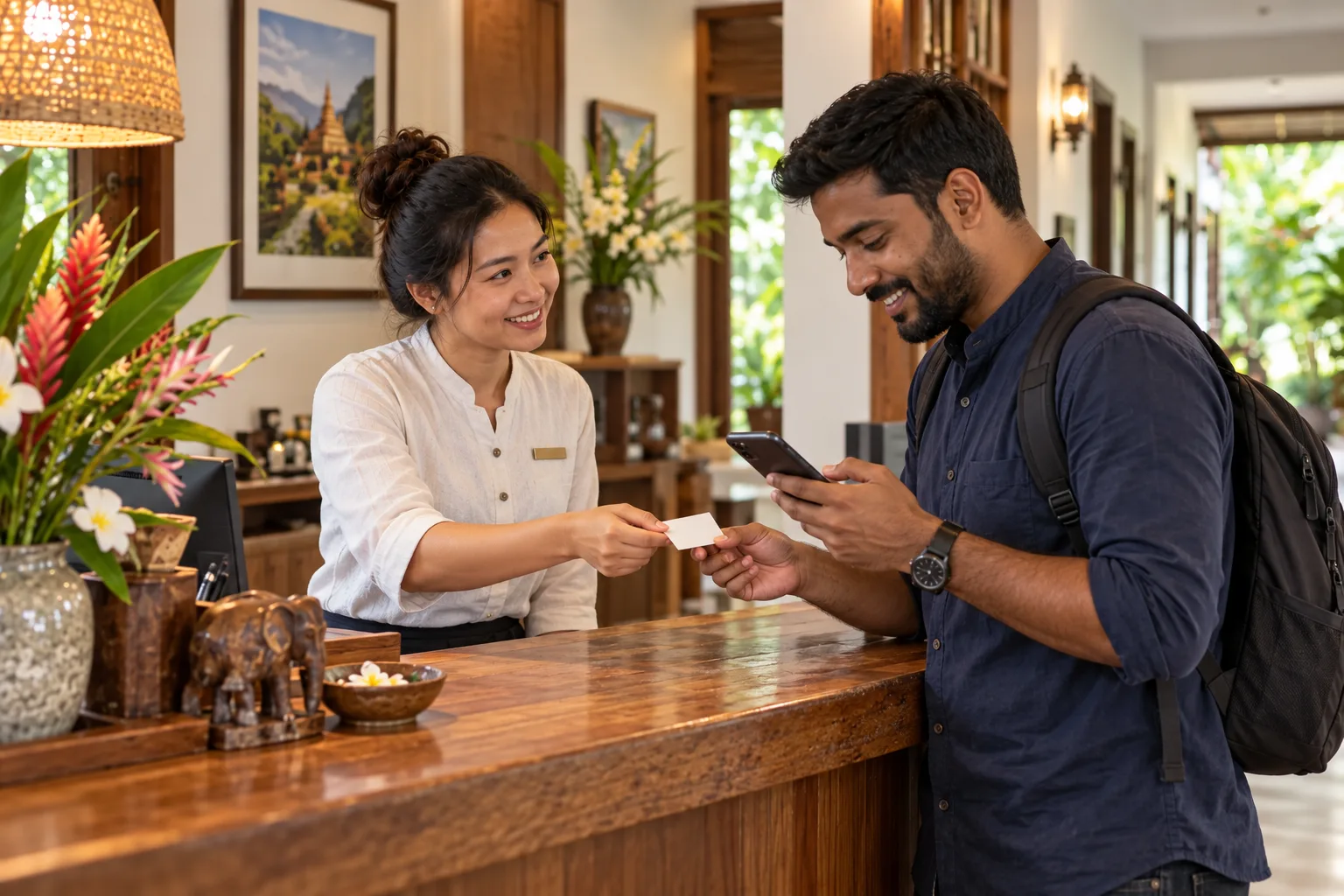
A receptionist gives a returning guest a blank return card as they check details on a phone.
Case studyComposite case11 min read

An upcountry hotel goes digital, part 5: phase two — minimal self-booking, plus the checkout return card

Backed by phase-one data, the hotel launches minimal self-booking: only the hot room types, only availability and a deposit, complex rooms staying on human confirmation. And at checkout it hands guests a card that turns OTA guests into repeat guests booking directly next time.

Read article
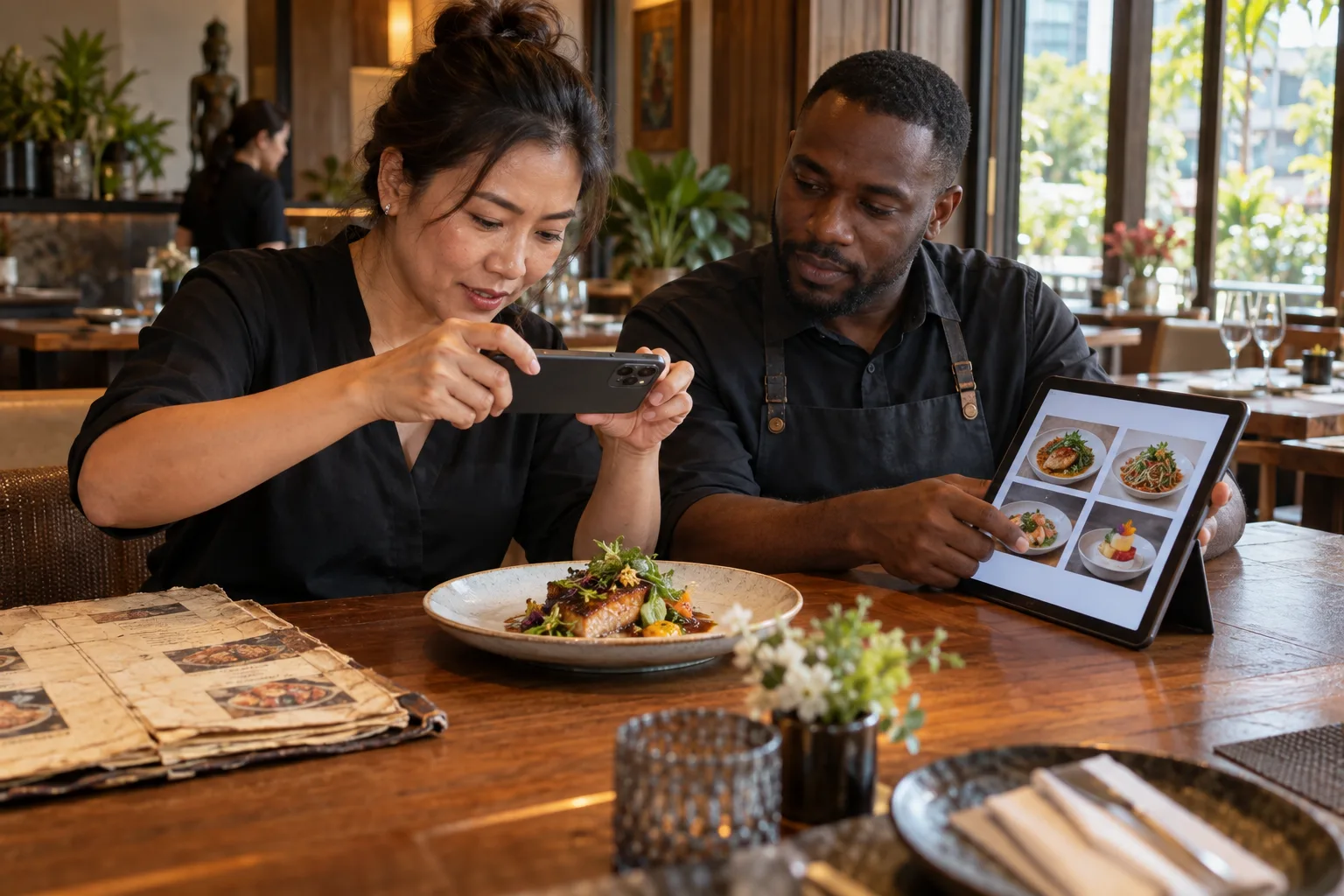
Restaurant staff photograph a dish for the digital menu beside a worn paper menu.
Case studyComposite case10 min read

A Bangkok mid-to-high-end restaurant goes digital, part 2: start with menu digitalization — it is the foundation of everything after it

The first step is not buying a system; it's getting the menu right. Every dish's name, description, price, and photo goes online into one unified digital menu. It solves the paper-menu problems of aging, dirtying, and reprinting or hand-scratching price changes — and it is the foundation the website ordering and kitchen orders are later built on.

Read article
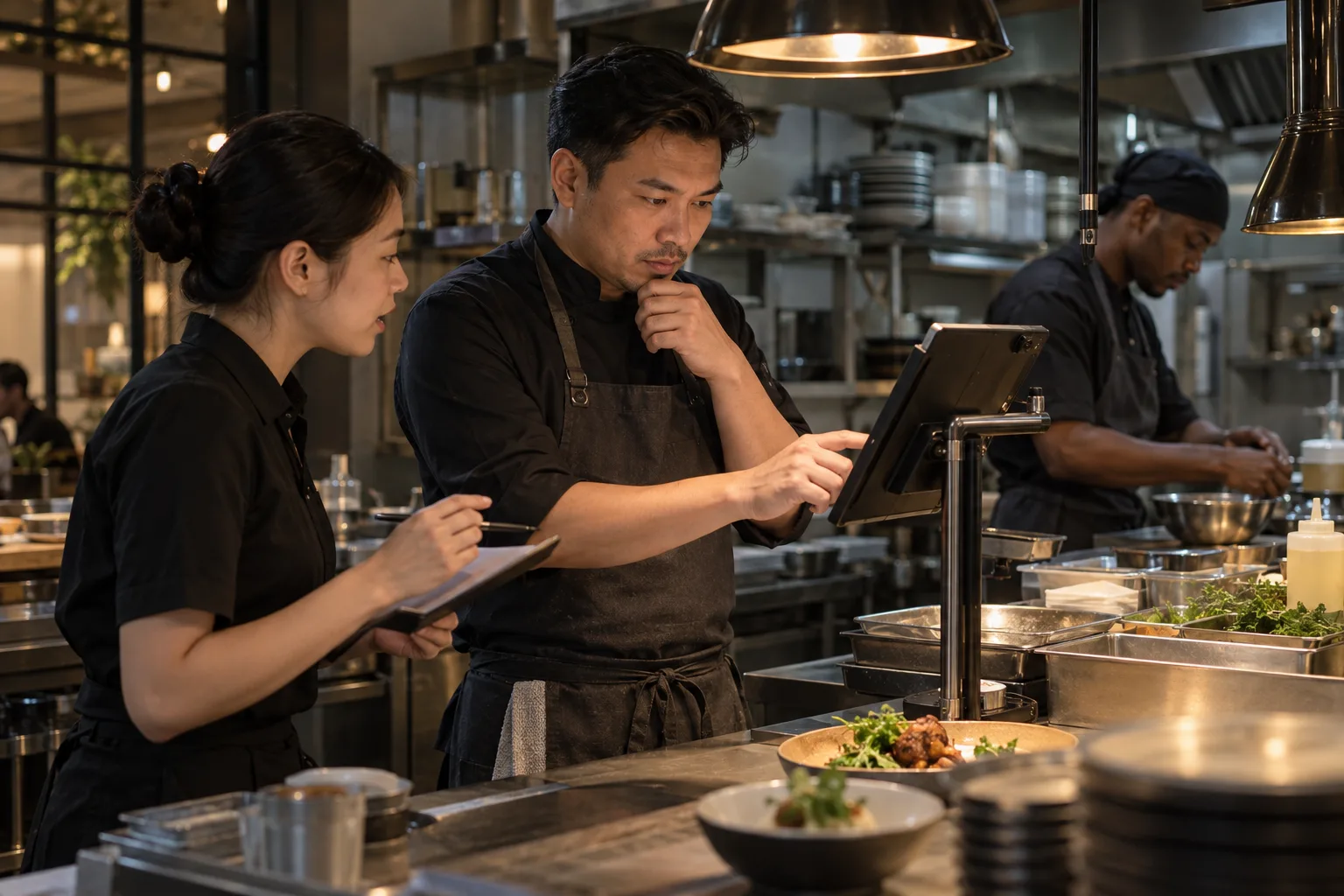
A chef checks a digital order with a server and chooses the cooking sequence himself.
Case studyComposite case10 min read

A Bangkok mid-to-high-end restaurant goes digital, part 4: start from the basics — website ordering to the kitchen, without scheduling for the chef

Marketing brings guests in and the menu is online; the next step makes orders lighter: website ordering, with the order automatically sent to a kitchen display. But this step deliberately has no automatic scheduling — how the work is planned stays the chef's call, so the existing workflow isn't broken. The goal is fewer missed orders, fewer chases, fewer mistakes — not a system deciding for the chef.

Read article
The school owner and an instructor review course information before investing in a learner portal or AI.
Case studyComposite case9 min read

A training center goes digital, part 2: why build the info and enrollment entry point first, not a learner system or AI

The center genuinely needs a learner portal and AI-assisted test generation and Q&A, but the first phase still builds only the entry point and enrollment convergence. Not because the needs are absent — but because these systems only land safely on a unified entry point, clean data and staff readiness.

Read article
A training-center administrator helps a student enter an enquiry while an advisor discusses the course schedule.
Case studyComposite case10 min read

A training center goes digital, part 3: converging scattered chat enquiries into trackable enrollment data

The center turns repetitive enquiries into course pages plus an enrollment form, so every enquiry becomes a structured enrollment record. Admin is freed from repeat answers, and the school sees its enquiry volume and enrollment conversion for the first time.

Read article
An instructor and administrator help adult students sign in to the learning portal after class.
Case studyComposite case10 min read

A training center goes digital, part 4: admin learns to follow up with data, and students get a first portal to log into

Admin moves from 'reading forms' to 'following up enrollments with data,' and the learner portal phase one does only four things — login, schedule, homework, grades — so students first form the habit of logging in, before any more features.

Read article
A clinic owner explains a consultation request on a tablet to a prospective client.
Case studyComposite case8 min read

A boutique aesthetic clinic goes digital, part 2: why trust and consultation capture come before the booking engine

The clinic clearly needs online booking. But a booking engine only converts people who have already decided to trust the clinic — and this clinic's bottleneck was that strangers were deciding not to. The first data slice worth building is the consultation request itself.

Read article
Clinic reception staff consolidate phone and website inquiries at the front desk.
Case studyComposite case9 min read

A boutique aesthetic clinic goes digital, part 3: converging scattered consultations into trackable requests

The clinic's consultations were being swallowed by midnight LINE chats. The next build captures every consultation request — from the form, LINE and phone — into one place, so the clinic can finally see volume, channel and what happens after.

Read article
Two clinic colleagues follow up on a consultation request together.
Case studyComposite case9 min read

A boutique aesthetic clinic goes digital, part 4: turning the request list into a follow-up habit

The request list was accurate — but a record does not convert anyone by itself. This phase gives the receptionist a simple follow-up rhythm, and lets the conversion data start telling the clinic which channels and treatments actually bring people in.

Read article
A clinic owner and receptionist review booking data and a paper calendar.
Case studyComposite case10 min read

A boutique aesthetic clinic goes digital, part 5: what the conversion data said about deposits, booking and CRM

In the later phase, the accumulated consult-to-visit data is used to decide whether deposits, online booking or a CRM are justified — and the honest answer depends on what the data actually showed, not on a feature list.

Read article
The shop owner and production lead discuss the next operating step among current print tools.
Case studyComposite case7 min read

A print shop goes digital, part 2: choosing the next operating slice

The full order-system need already exists. The shop now decides which existing tools can remain reliable and what must be learned before the next independent build.

Read article
The owner and operations lead review anonymous feedback before deciding what system to build next.
Case studyComposite case9 min read

A spa chain goes digital, part 2: choosing the next operating slice — feedback before booking

The full need for booking and management systems already exists. The owner first builds the slice that produces cross-store decision data, and defers the rest until real data and readiness arrive.

Read article
A spa guest scans a QR code on her checkout receipt while the receptionist confirms the service record.
Case studyComposite case10 min read

A spa chain goes digital, part 3: the receipt QR that captures per-staff feedback

The chain turns each checkout receipt into a feedback entry point — binding the review to the therapist at receipt time, archiving responses to one place, and routing low scores to the owner and managers.

Read article
A branch manager coaches reception staff on reviewing anonymous guest feedback together.
Case studyComposite case9 min read

A spa chain goes digital, part 4: helping staff absorb and act on centralized feedback

Feedback is now centralized, but the outcome depends on store managers and receptionists adopting it — who replies, who closes a low score, and how counter staff gently invite scans without extra work.

Read article
A manager and therapist discuss guest feedback as one part of a supportive coaching conversation.
Case studyComposite case10 min read

A spa chain goes digital, part 5: using reviews to support staff — and choosing the next build

In the later phase, accumulated per-therapist reviews become one input to staff feedback under clear fairness rules, and the real data decides whether booking, deposits or membership come next.

Read article
Comparison7 min read

File upload: when is it still a form, and when is it already an order system?

Letting customers attach a file to an enquiry is a small step. Statuses, accounts and payments are a different animal. Here is where the line actually sits.

Read article
Guide8 min read

Form, booking, or system? A decision guide

Use volume, availability, state, payment and staff readiness to choose the first operating slice — while keeping the full business direction visible.

Read article
A business owner and consultant map the first practical step between a website, form, booking, and operations system.
Comparison8 min read

Website, form, booking, business system: where the boundaries are

Pages, forms, booking services and operational systems solve different parts of a business journey. Define the long-term need, then choose a safe first operating slice.

Read article
A shop employee checks a new form enquiry with the owner and prepares a personal reply.
Explainer6 min read

A customer submitted your form. Now what?

A form submission is not the finish line — it is the start of a small relay. Here is the realistic path from notification to reply, and where it usually breaks.

Read article
A small-business team reviews its website as the first point of contact for customers.
Explainer7 min read

A website is the entry point to digitalization, not the whole system

A business website can become the public entrance for information, useful actions and measurable marketing without pretending to be the entire operation behind it.

Read article